
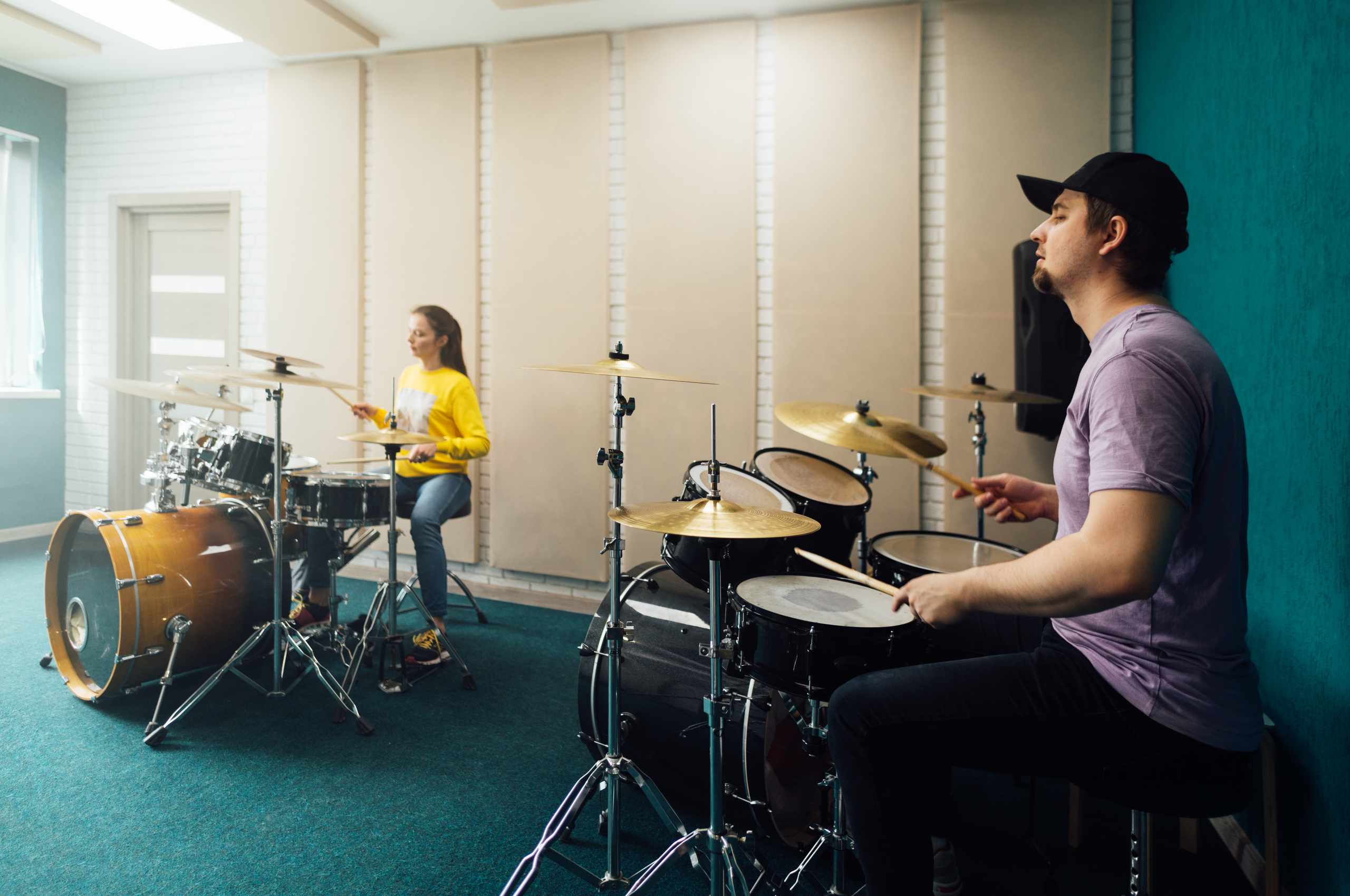
Why adding the bass drum breaks a basic drum groove
Play slow eighth notes on the hi-hat, add a backbeat on the snare for beats two and four, then throw in a bass drum. A lot of beginners can play a steady rhythm on the hi-hat and snare but once the kick drum comes in, it’s almost like the groove gets thrown out the window. Your hi-hat can speed up, your snare can land late, or your kick foot can throw the groove out of time. The reason this usually happens is your brain is trying to keep track of multiple things all at the same time and the connections between them aren’t established yet.
The bass drum can be the most difficult instrument to integrate because your foot is moving in a different way than your hands. The hi-hat hand is going to continue to move evenly on eighth notes, your snare hand is going to land on a certain beat, and your kick foot is going to have its own pattern. Rather than think about all three of these as completely separate entities, start to find the points where they overlap. If the bass drum is going to be played along with a hi-hat hit, you should think about hitting those two instruments at the same time. This is much easier for your brain to process than monitoring each limb individually.
To practice this concept, leave out the snare drum altogether. Play slow eighth notes on the hi-hat and then add only the bass drum pattern. Count out loud while you play so that you know where each kick note falls in the measure. If the hi-hat is speeding up or slowing down when your foot moves, slow it down until you can maintain an even hi-hat pattern while playing the kick drum. When you’re comfortable with that combination, add the snare back on beats two and four, keeping the same tempo.
Also consider what your body is doing right before each kick note. There are lots of people who will raise their shoulder, grip the sticks tighter, or even increase the size of their hi-hat stroke because they’re getting ready to move their foot. This can disrupt the timing of the other instruments even though the kick itself is accurate. Maintain a consistent stick height and allow your foot to do whatever it needs to do. Try practicing quietly because it eliminates the urge to strike the drums hard.
If there’s one bass drum note in particular that always seems to mess up the groove, isolate just that area. You might loop two beats rather than repeating the entire bar. Work on the hi-hat and kick drum together until the timing feels solid and then add in the snare if needed. Working in short loops helps you to determine if the kick drum is rushing, dragging, or landing in time. Use a metronome to help give you an external perspective on the timing instead of relying solely on the feel.
Consider what happens directly after the kick drum as well. Sometimes the kick itself is correct, but the next hi-hat note comes too fast because you rush back into playing. Play a few bars and listen to the notes around the kick drum. If the space before or after the bass drum changes, practice slowly and try to maintain a constant hi-hat motion while allowing your foot to come in below it.
The idea here is to get the kick drum to work within the groove rather than disrupting it. You’ll know you’ve reached that stage when you can add a bass drum note without altering the spacing of your hi-hat or throwing off the placement of the snare. Once you’ve achieved that, try moving a single kick drum note to a different location in the measure and observe whether or not the timing remains steady. If it does, it means you’re able to flexibly coordinate the various components of your drumming instead of simply playing by rote.